
The Report Nobody Wants to Write
Every compliance team has a dashboard.
Read article →
Approve articles one at a time, release them together as a numbered version, and reference the controls and procedures behind every one. Your policy stays current, version-controlled, and traceable back to who approved what, and why.
Approved article by article.
Every article is drafted, reviewed, and approved on its own. Releasing the policy just packages what's already been signed off.
Referenced, not retyped.
Articles point to the controls that govern them and the procedures that put them into practice, so the "why" and the "how" travel with every line of policy.
Versioned, with provenance.
Each release gets a version number and effective date, with full history behind it — who approved what, and what changed since the last one.
Most policies live as a PDF in a shared drive. Every change means a new file, a new email, and one more question nobody can answer: which version is current, who approved it, and what requirement does this paragraph actually satisfy? The procedure it depends on drifts out of date on its own.
In PolicyCo, a policy is assembled from articles, and each article references the controls that govern it and the procedures that put it into practice. Nothing is copied into the document or tracked in a side spreadsheet. The policy is a version-controlled record that carries its own provenance: where each requirement came from, how it's carried out, and who signed off along the way.
Old way
PolicyCo
Review happens where the content actually changes: at the article. Each one moves through its own draft, review, and approval, with comments attached directly to the language they're about and every edit captured in its version history. A section can move forward without waiting on the rest of the document.
Approved articles are assembled into a release candidate, and a Policy Manager or board member releases the policy with a version number and effective date. Release is the formal packaging step, not the place where review starts over, and every released version keeps the full trail of what was approved, by whom, and when. Role-based access keeps the right people in each review, and everyone else out of policies that aren't theirs.
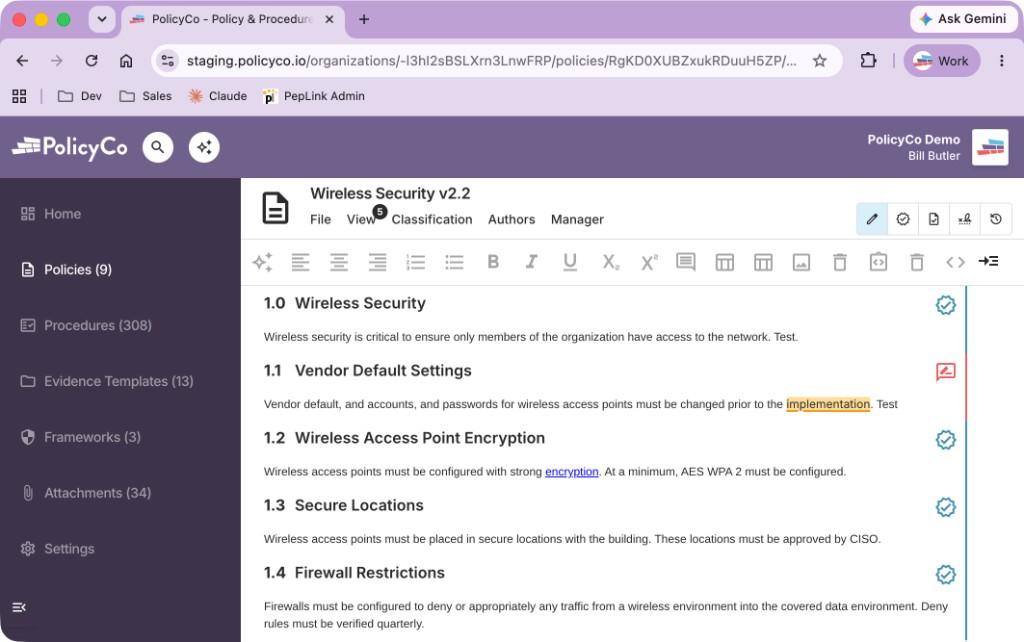
An email goes out. Nobody can say for sure who actually read it, or whether anyone signed off.
PolicyCo distributes policies and procedures to the people who need them — by department, by role — and tracks who's seen what, and who hasn't. Attestations are captured directly in the platform, with a full audit trail behind every signature — proof when a licensing board, a funder, or an auditor asks for it, and a clear picture of adherence before they do.
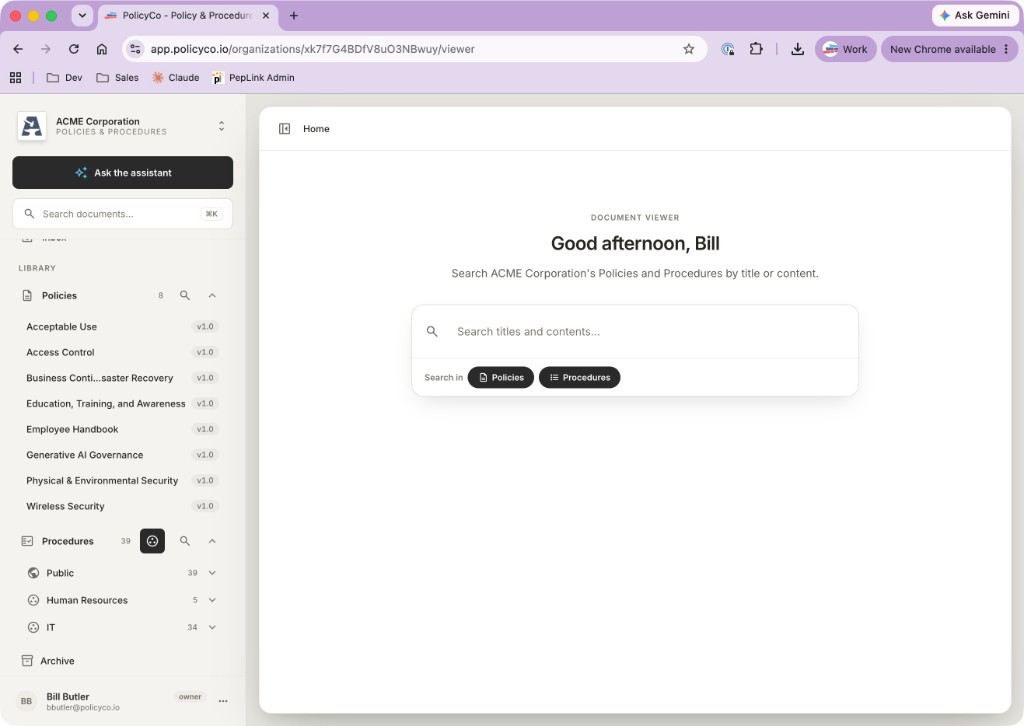
Nobody opens the policy portal until they're forced to.
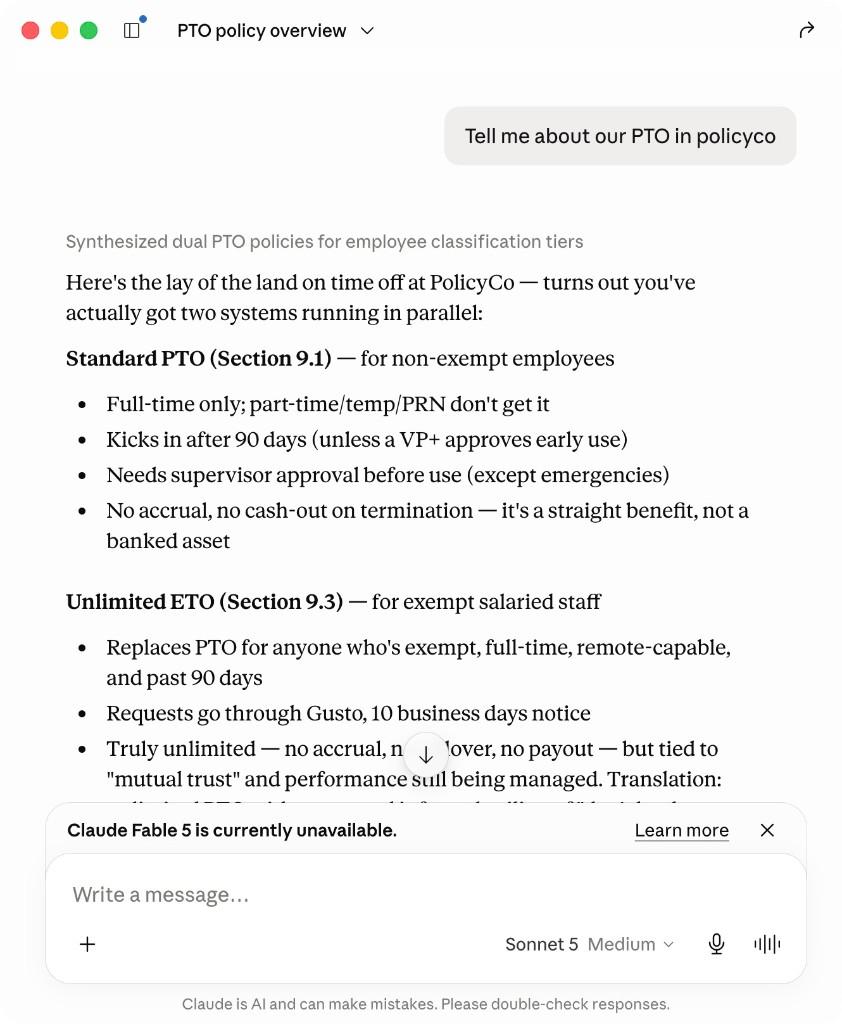
PolicyCo answers policy questions directly in Slack, or via MCP in ChatGPT, Claude, and any other AI agent your team already runs — no separate login, no hunting through folders. Ask "how many PTO days do I get" and get the current answer, sourced from the policies and procedures themselves, not whatever someone half-remembers from last year.
Managing policies and procedures across 11 programs, with state licensing and federal funding requirements behind every one of them.

HIPAA and HITRUST compliance, with information security policies and procedures managed end-to-end.
Book an overview call and we'll show you how articles, controls, and procedures come together in one versioned policy.
Expert guidance on compliance and policy governance.
Every compliance team has a dashboard.

A structured approach to evidence collection that actually holds up in an audit — without the implementation project.

What separates compliance programs that survive scrutiny from those that collapse under it